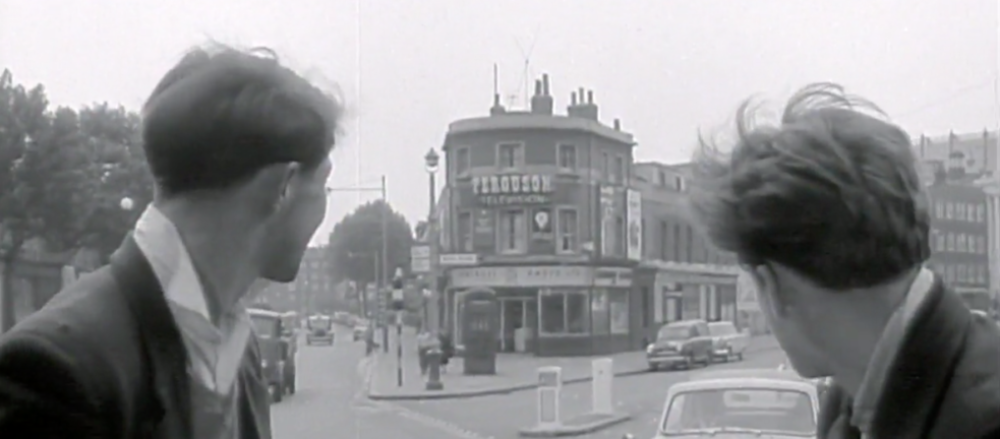
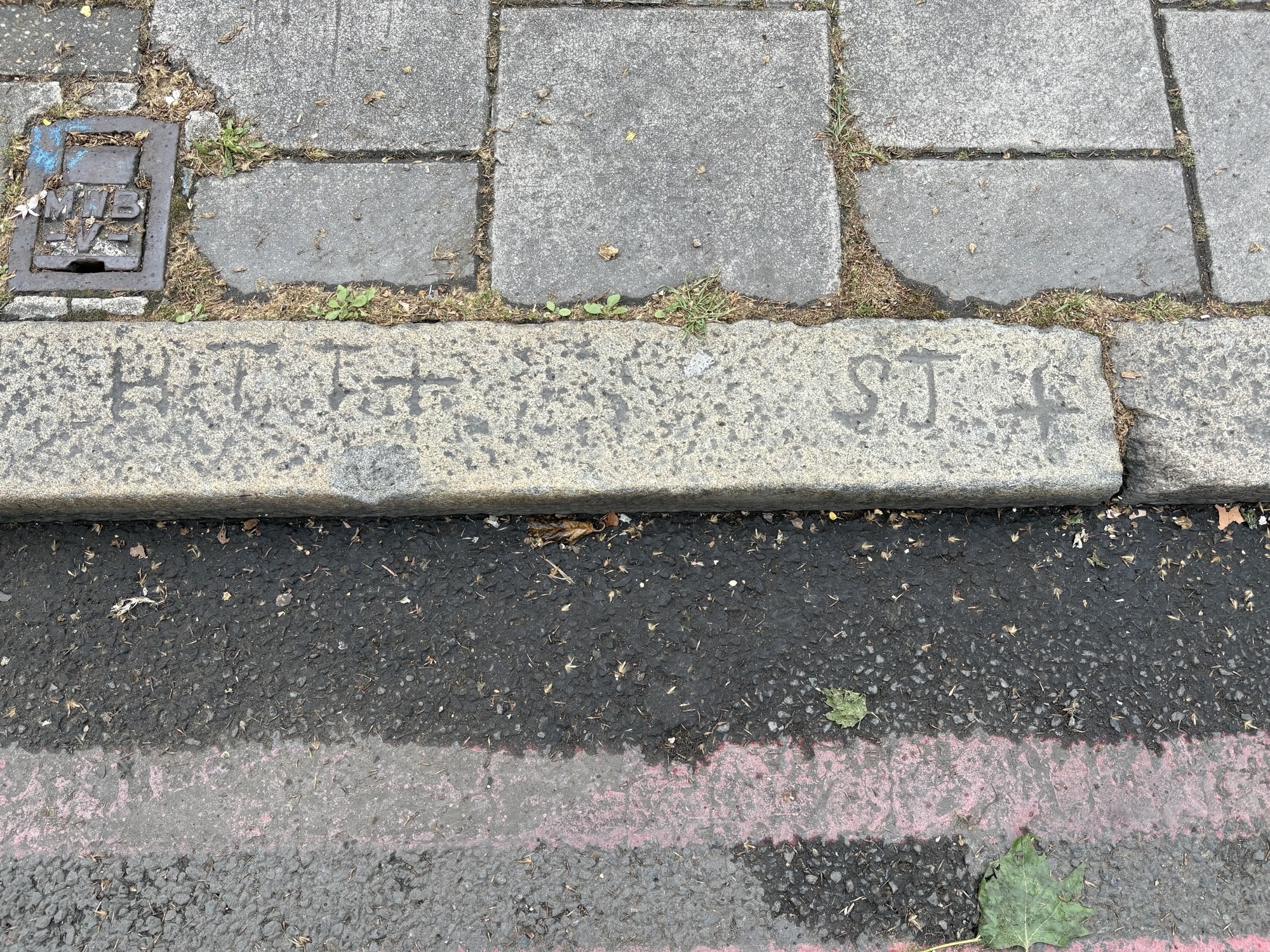
If you’ve ever looked at your nearest kerb you’ve seen them. They’re in Kennington Cross, in the older bits of Elephant, even in the languid streets of Walworth. They’re cryptic inscriptions cut into the kerbs when they were laid down. Is it a cult symbol? The Masons? We love nothing more than a mystery, and if you look at a kerb there are plenty to be found. Just don’t get hit by the 59 bus.
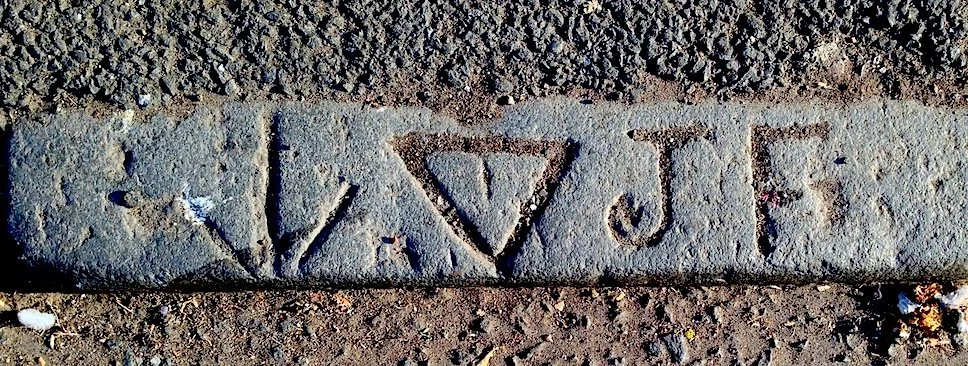
When it comes to hobbies like deciphering kerb markings there are plenty of sad, probably middle age white dudes out there with loads of time to waste on these matters, making the job of our research team much easier. An easy answer is that the marks are stonemason cuts to let the bosses know how many stones were cut that day by one person. But some have two markings, so that isn’t it. Other white dudes speculate that they marked the beginning and end of a day of laying them down, but in some places there are three of the same markings in a row. Many of these markings are just squiggles or crosses, further undermining that they were made to evidence the identity of the stone layer.


One middle age white dude with a LOT of time on his hands was Ashley Cowrie, who investigated 4000 miles (!) of British kerbstones to unlock the meaning behind this great British mystery and has written a surprisingly erudite paper about it. He debunks a number of theories, such as the presence of crosses to commemorate plague deaths (sorry sunshine, but during the plague of 1665 Kennington was but a swamp) or an indication of underground utilities (but some only appear once). In an age before street signs the crosses could indicate parish boundaries, but again they appear too frequently.
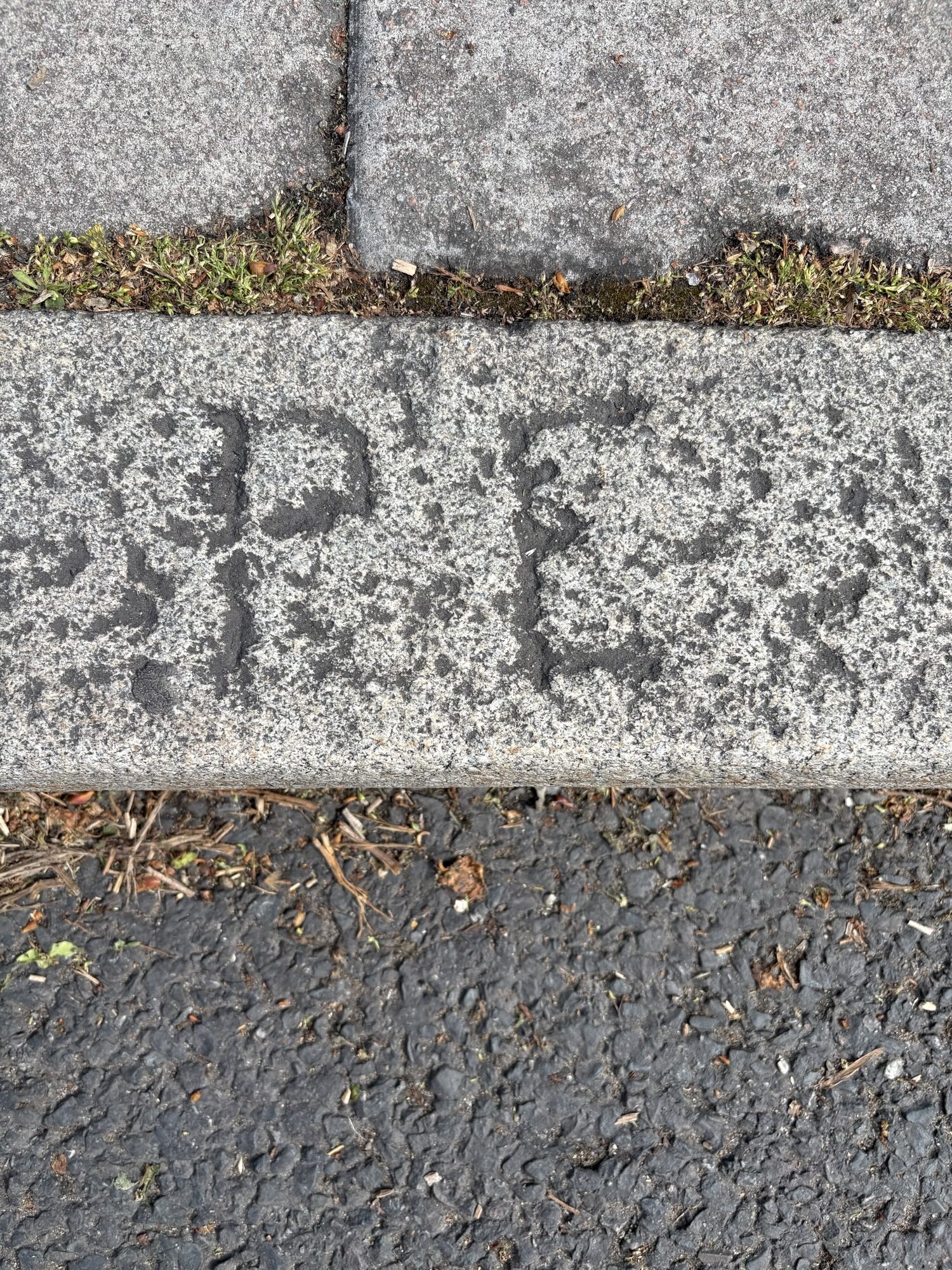
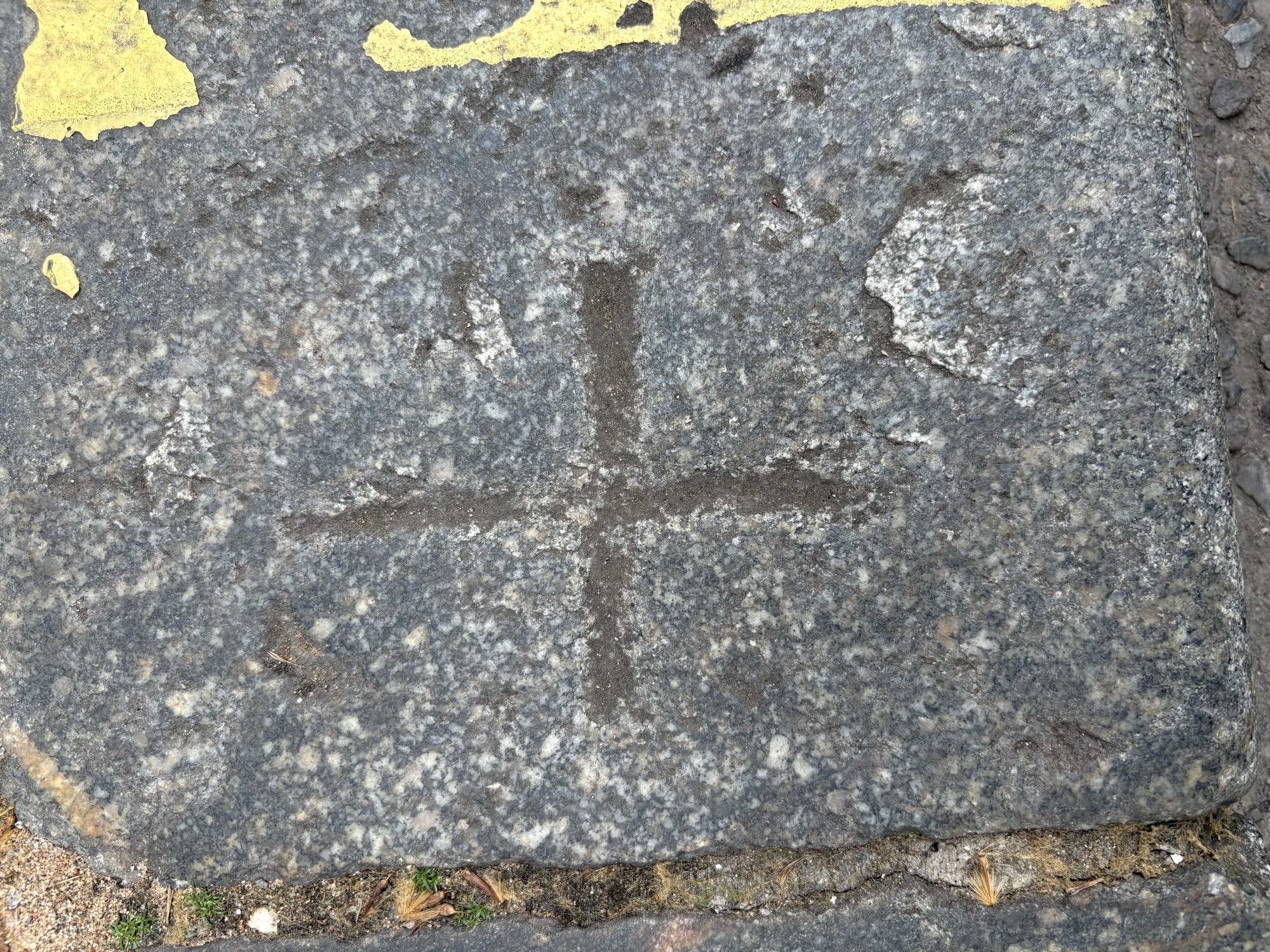
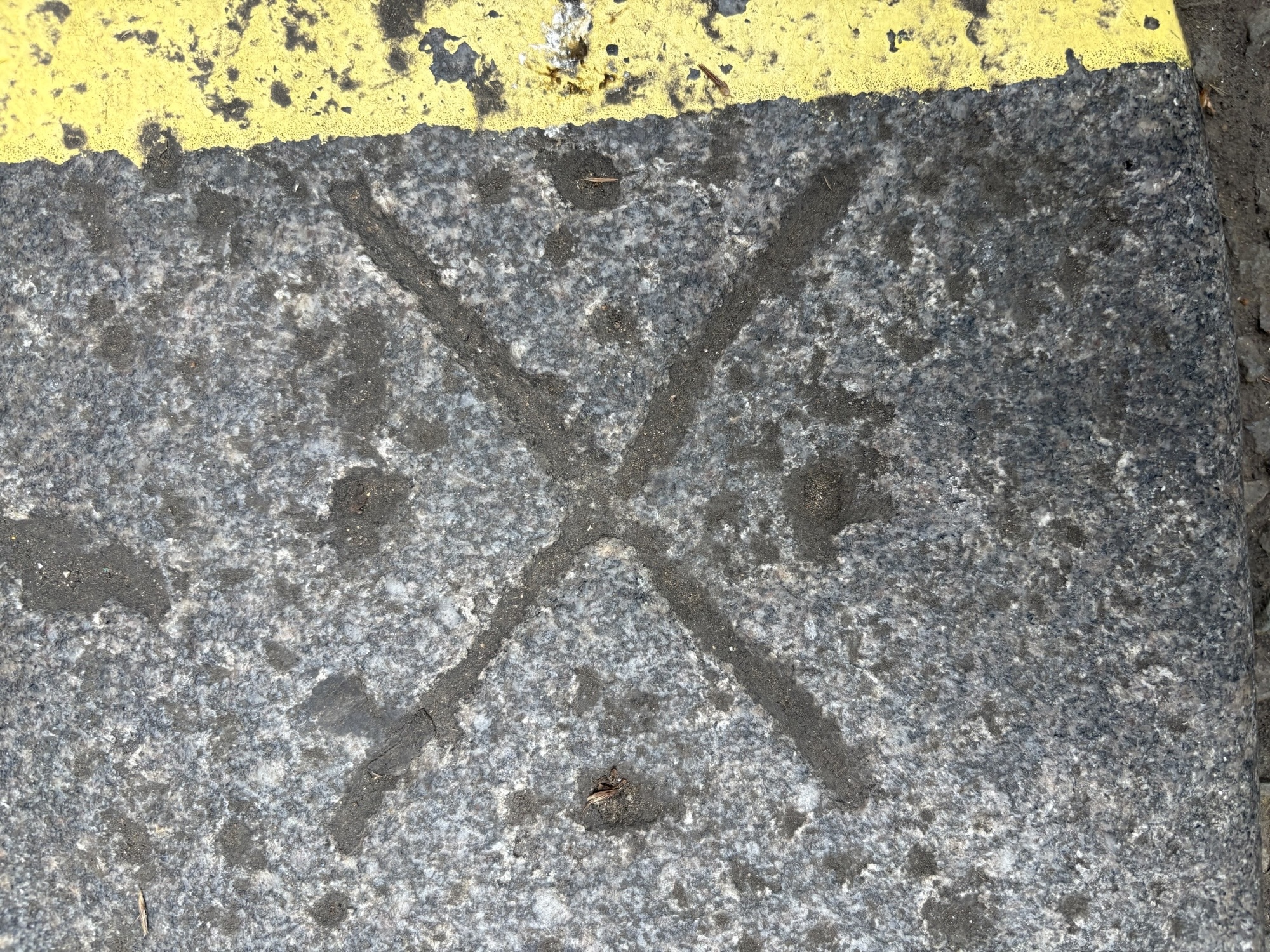
If you’re interested in kerb markings, first off you might want to seek professional help. But if the desire persists then there are many resources online to assist your fixation, such as their own Facebook page (kids, Facebook was a social media tool used a LONG time ago). But there is tantalisingly no consensus as to the meaning of the many carvings. We’ve eliminated stonemason marks, an indication of underground utilities, parish boundaries, or individual identities of the worker. This Victorian mystery remains an enigma that you can solve on your own. That is, if you struggle to find friends.

“sad,probably white middle aged dudes”.Come on!
I enjoy your witty reviews, but you slipped up .