Lambeth Palace Library

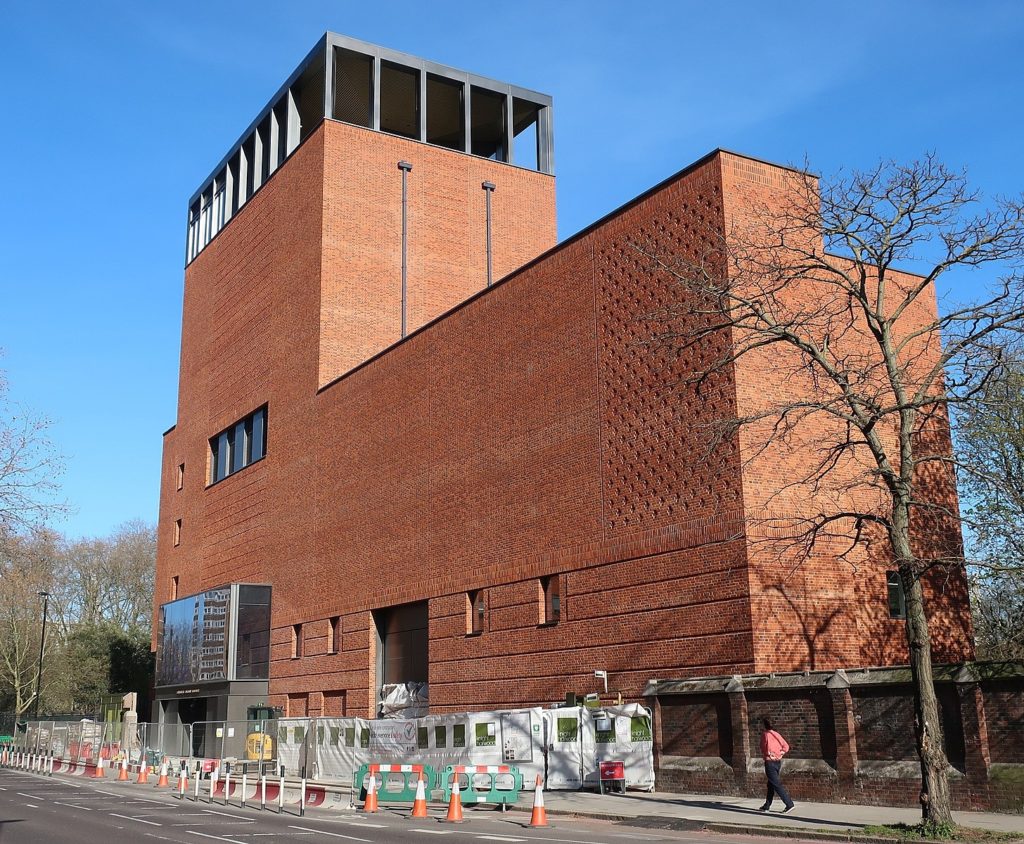
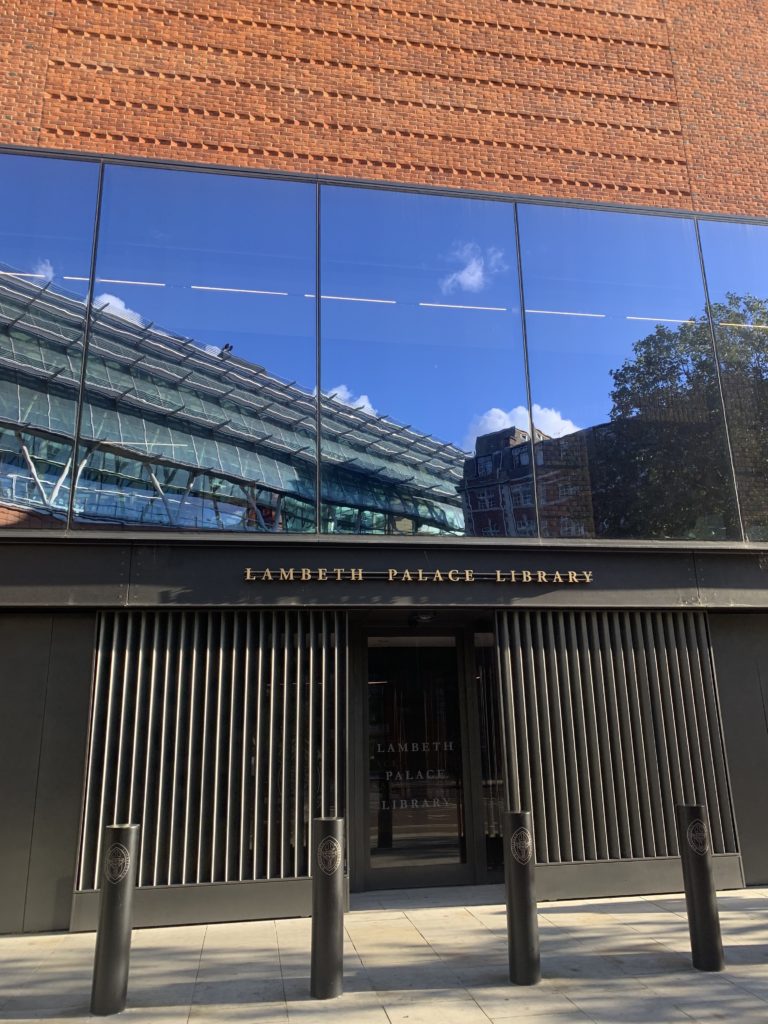
Located at the very pinnacle of the Runoff catchment area, today finally witnessed the opening of  Lambeth Palace Library. Now you might be thinking ‘say WHAT, a nine storey library has just opened in Greater Kennington’ and you can be forgiven for the oversight. The massive structure has been carved out of just 3% of the archbishop’s garden and lies next to Archbishop’s Park, although it’s easy to miss. The structure is a victory of understatement with ponds and tweedy looking brick crosses. This belies the gravity of a building created as a protector of manuscripts and designed as a fortress against the pesky factors that threaten them such as light, water, and humans. However, it is also a museum so today we checked it out for you. As The Guardian did nearing completion last year.
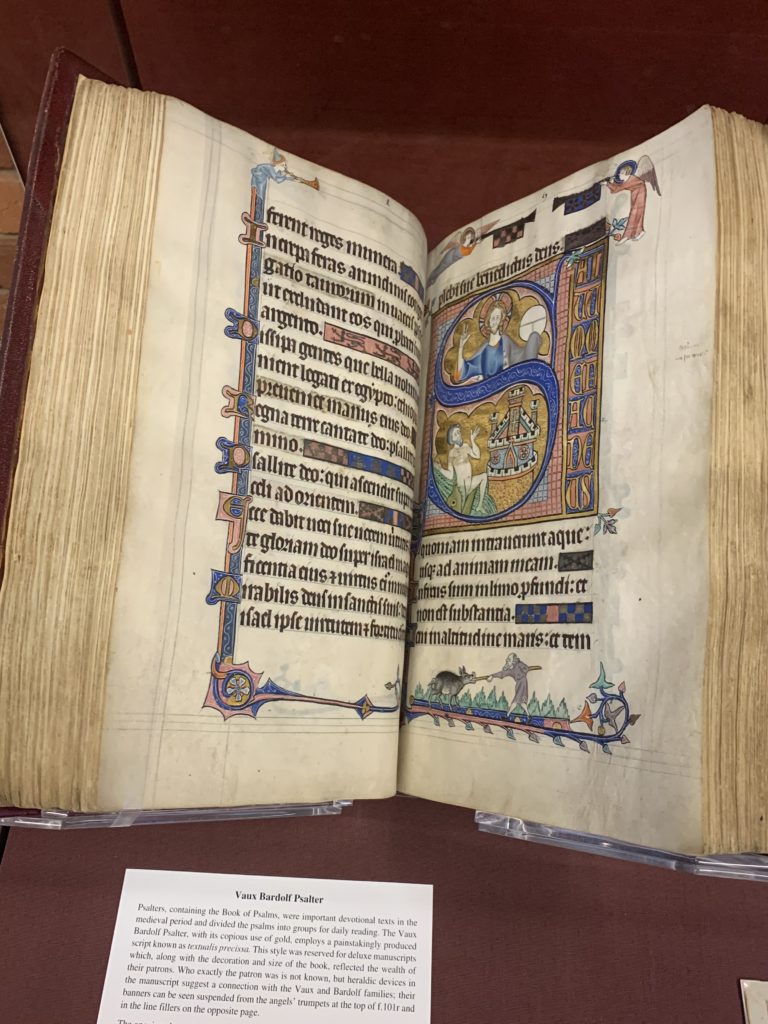
Treasures of the Library 1 is a petite, pop up exhibition in vitrines on the first floor and includes an early Gutenberg bible, brilliantly illuminated manuscripts, a letter about the madness of King George, a bible used at the Queen’s coronation, and something called the ‘Lambeth Apocalypse’. Which, as it turns out, does not refer to Sunday mornings outside of nightclubs in Vauxhall.  The interactive displays on the ground floor are very fun and give you a chance to explore the archive in more detail, as does their website. 
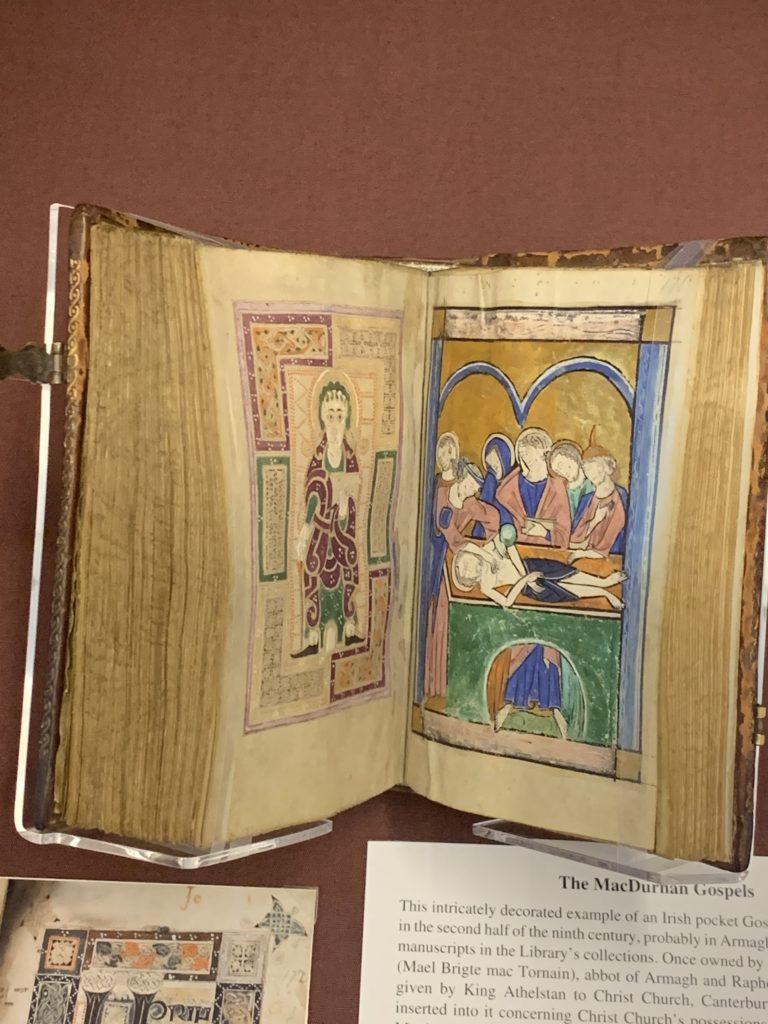
This is a small exhibit but one that will expand in the new year. The variety of displays is endless, so something for that pocket diary that we’re always nagging you about. It is open rather inconveniently Monday to Friday 9 to 5. But it’s free, so there you go. The reading room is also available if you have a pass and require more research. Or if you are even more nosey than we are. 
Refugees and Al Weiwei at the Imperial War Museum

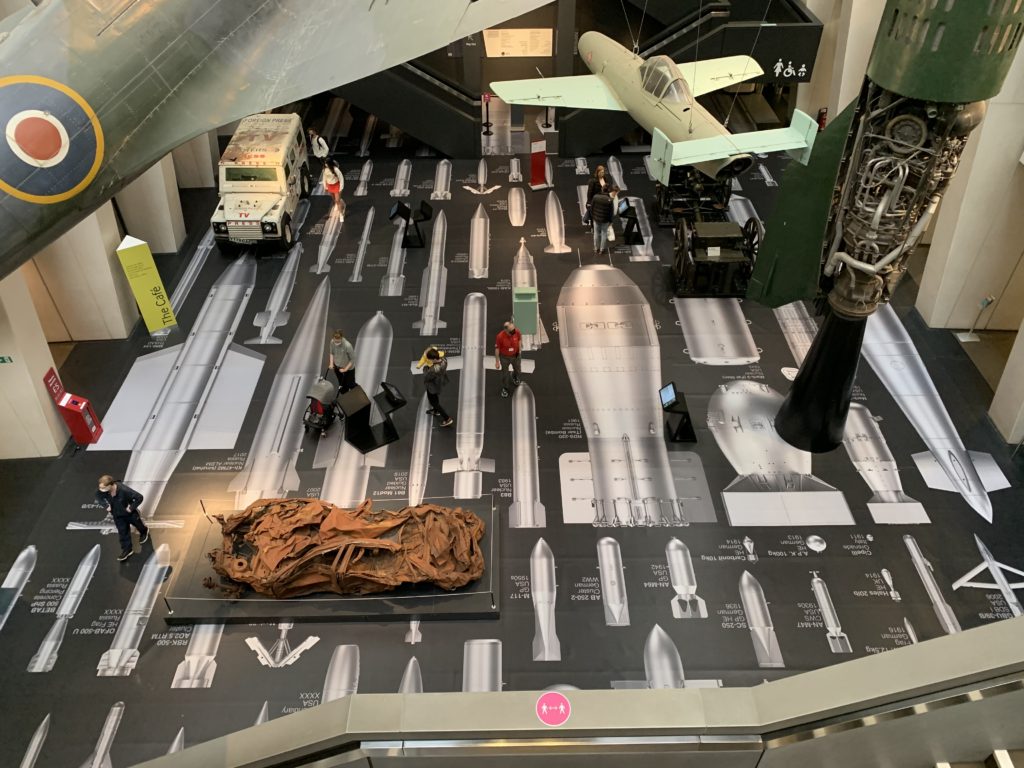
Last week we visited our very own Imperial War Museum to see the extremely evocative and until recently long closed exhibit ‘Refugees: Forced to Flee’ and its related exhibit ‘A History of Bombs’. The latter was created by Chinese conceptual artist and dissident Al Weiwei, who himself was forced to flee China. A History of Bombs is a site specific illustration of the power of bombs and their impact on human lives. On the floor in the main gallery are illustrations and descriptions of bombs so small they can fit in your hand, and others so life shatteringly huge the snake up a staircase. It is a moving reminder of how the human race built up a mind boggling arsenal in the 20th century just to obliterate ourselves. The parallel between bombs and something else that has obliterated ourselves over the past 18 months can’t be overlooked. 

The brutal reality of bombs is one reason why people become refugees in the first place, and the intriguing Refugees exhibition delves into different global conflicts such as the German invasion of Belgium during WW1, ethnic cleansing during the Bosnian War and the treacherous Mediterranean crossings of the present day. The exhibit begins by the societies that people departed from and often the brutal choices involved in leaving your culture behind for a place of safety where you may or may not be welcomed. 

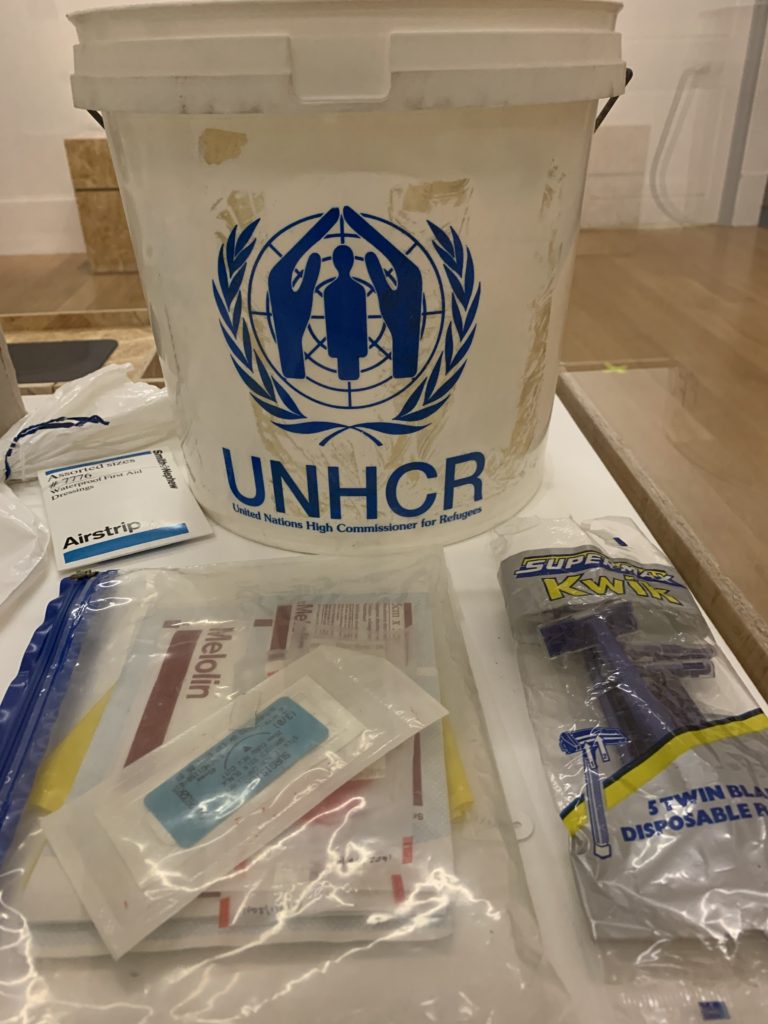
The main section of this exhibit is dedicated to the journey that refugees take, both physically and mentally, and efforts of organisations like UNHCR which are there to help them. This includes camps where people set up a vibrant temporary community in a sometimes harsh and unforgiving surrounding. The final section explores the somewhat ambivalent attitudes of countries who accept refugees, and their efforts to help them assimilate and to preserve their culture. 

Included in the exhibit is a 360 degree immersive film installation created by CNN depicting life in a refugee camp in Lesbos, Greece. 

While this exhibit might not be the most cheery way to spend a Bank Holiday, it certainly gets the grey matter jiggling after 16 months of watching ‘Homes Under the Hammer’. And it is open all next week during half term. Both shows are free but you must book in advance. Refugees runs until 13 June so get crackin’.

A Strangely Named Street and a New Library

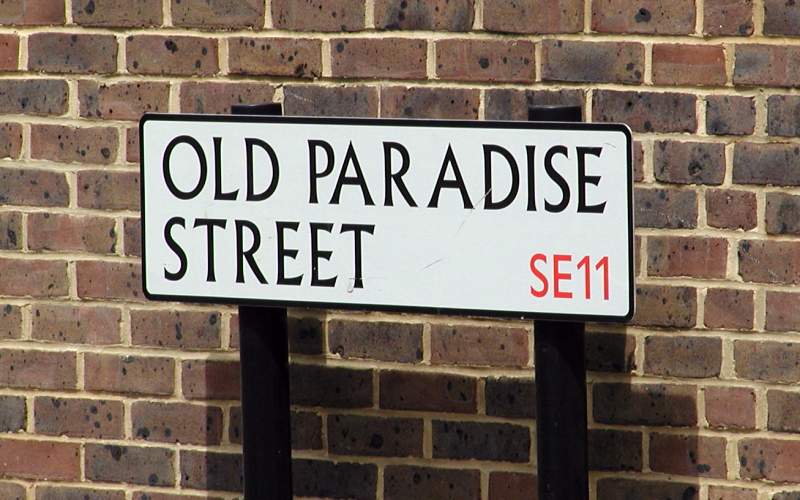
It’s up to the oldest part of Greater Kennington once again. For some time we’ve noticed a very peculiar street name in Lambeth North parts so we’ve done some digging and this is what we’ve come up with.

Old Paradise Street runs east of Lambeth High Street and is a very rare example of ‘paradise’ being used in a London street. The name conjures up visions of things that now seem exotic and far away, like a palm strewn beach, ordering food in a restaurant, or standing at a bar. In earlier times the word ‘paradise’ was often applied to a great walled garden and was sometimes an indirect reference to a royal property. 

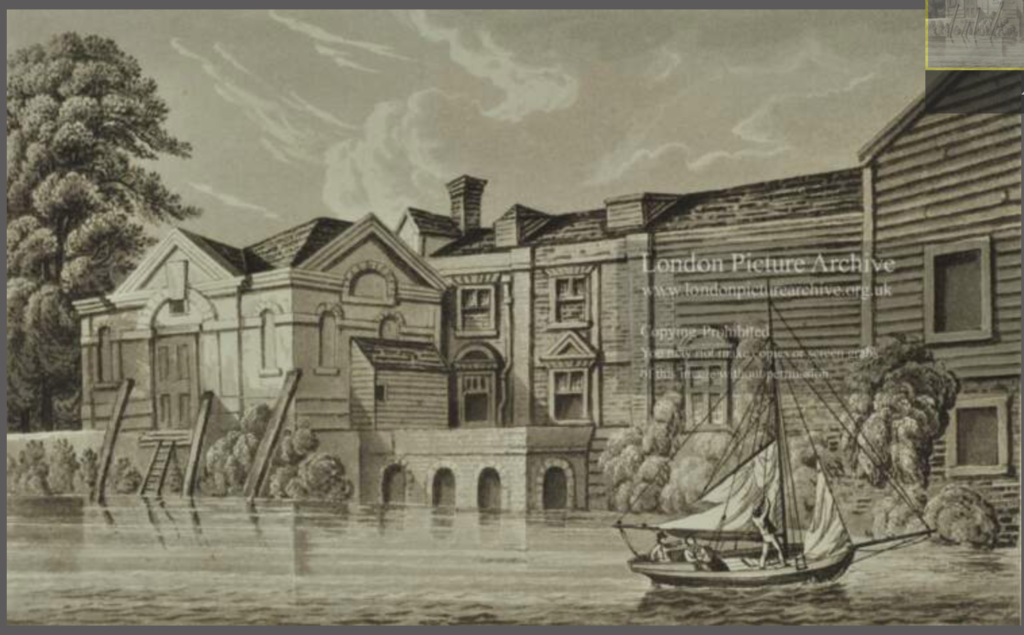
Now that you possess that little nugget of wisdom you might ask, what’s so royal about Lambeth North? Well, long before the Archbishop got his hands on it (we’re talking about 800 years ago), the land around was the location of Lambeth Manor House. In comparison to the farmland and folks around it, the house and gardens were grand indeed and extended far beyond the confines of the current palace. Old Paradise Street therefore was the name given to the thoroughfare that led the approach to the gardens. 

And while we are in that neck of the woods, when the world pivots back into a sphere of semi normality Greater Kennington will have a new, enormous library at it’s disposal! Work has just finished on (who knew) Lambeth Palace Library, just outside the Palace walls. It’s actually more of an archive and museum of treasures from the Palace, and will be a resource for academics and the merely curious. This article from The Guardian does it justice very well. When the gala opening is announced in order to bag an invite we’ll pull the ‘don’t you know we’re Kennington influencers’ card*.  Afterwards we’ll give you a full review.

*This never works

The children of Walnut Tree Place

A picture tells a thousand words #1

If you’re a regular reader then you’ll know that we love old photos of Greater Kennington. We have unearthed three very different photos and over the next three days we will take on little journeys to let you know what they tell us about our community. 

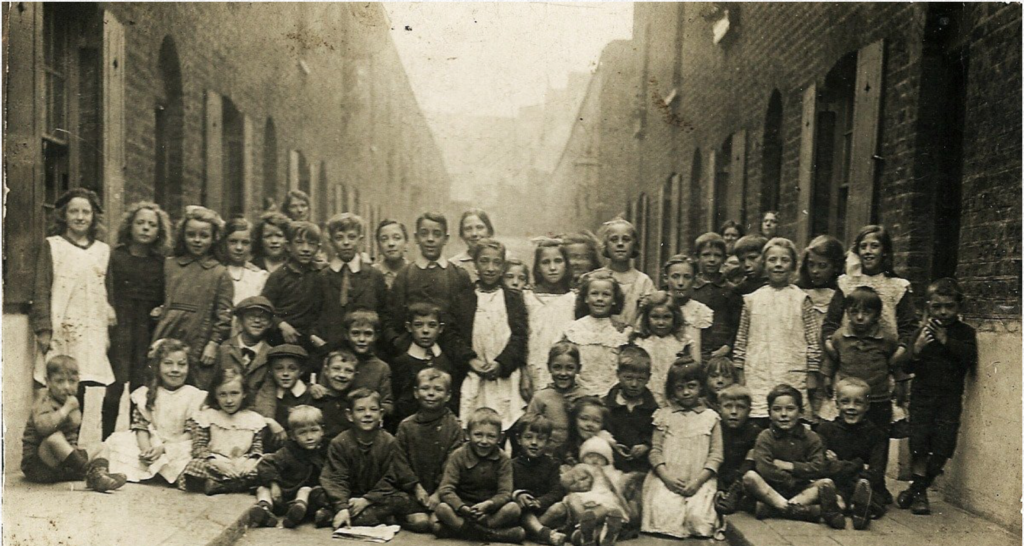
These lovely kiddos were residents of former Walnut Tree Place and the photo was taken in the summer of 1921. If you look closely you can see blackout boards on some of the windows (although obsolete after WW1 ended in 1918). These homes were built during the first half of the 19th century mostly to house the families of people who worked in factories along the Thames. 

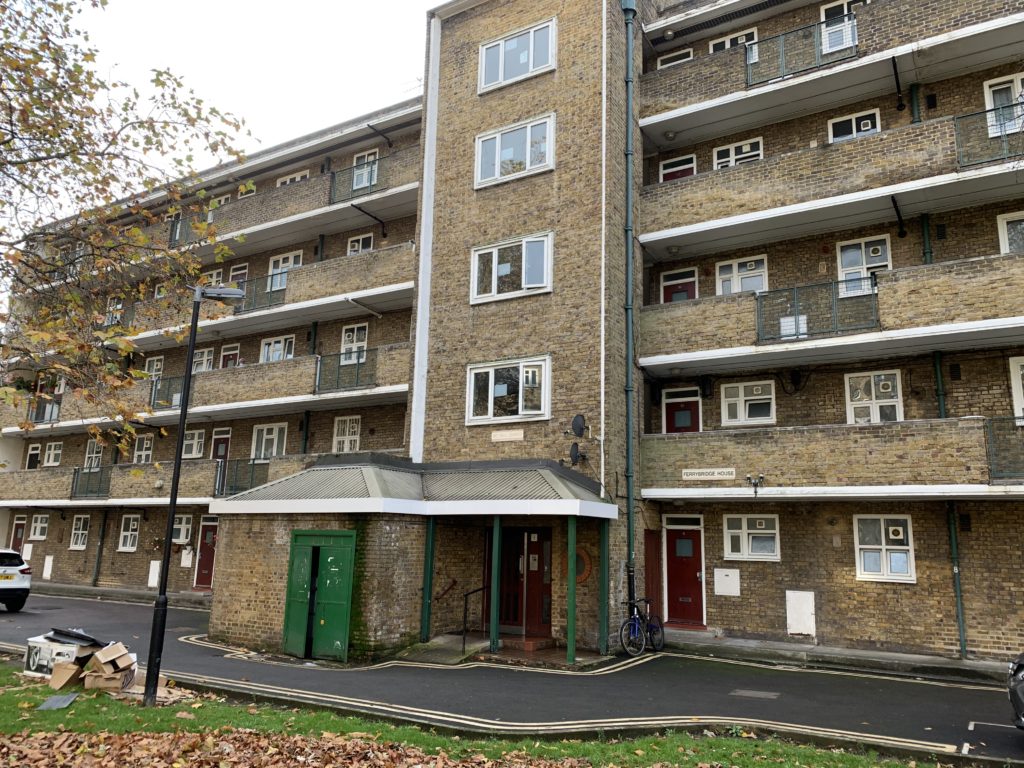
Poor housing conditions became a pressing issue after WW1 and these homes were torn down by London County Council not long after this picture was taken. Between 1928 and 1934 the homes were replaced by what is now the China Walk Estate on the south side of Lambeth Road. The buildings were named after renowned China manufacturers. Walnut Tree Place has changed quite a bit in the past 99 years.

The top ten best places to eat in Greater Kennington – no. 9 – The Hercules

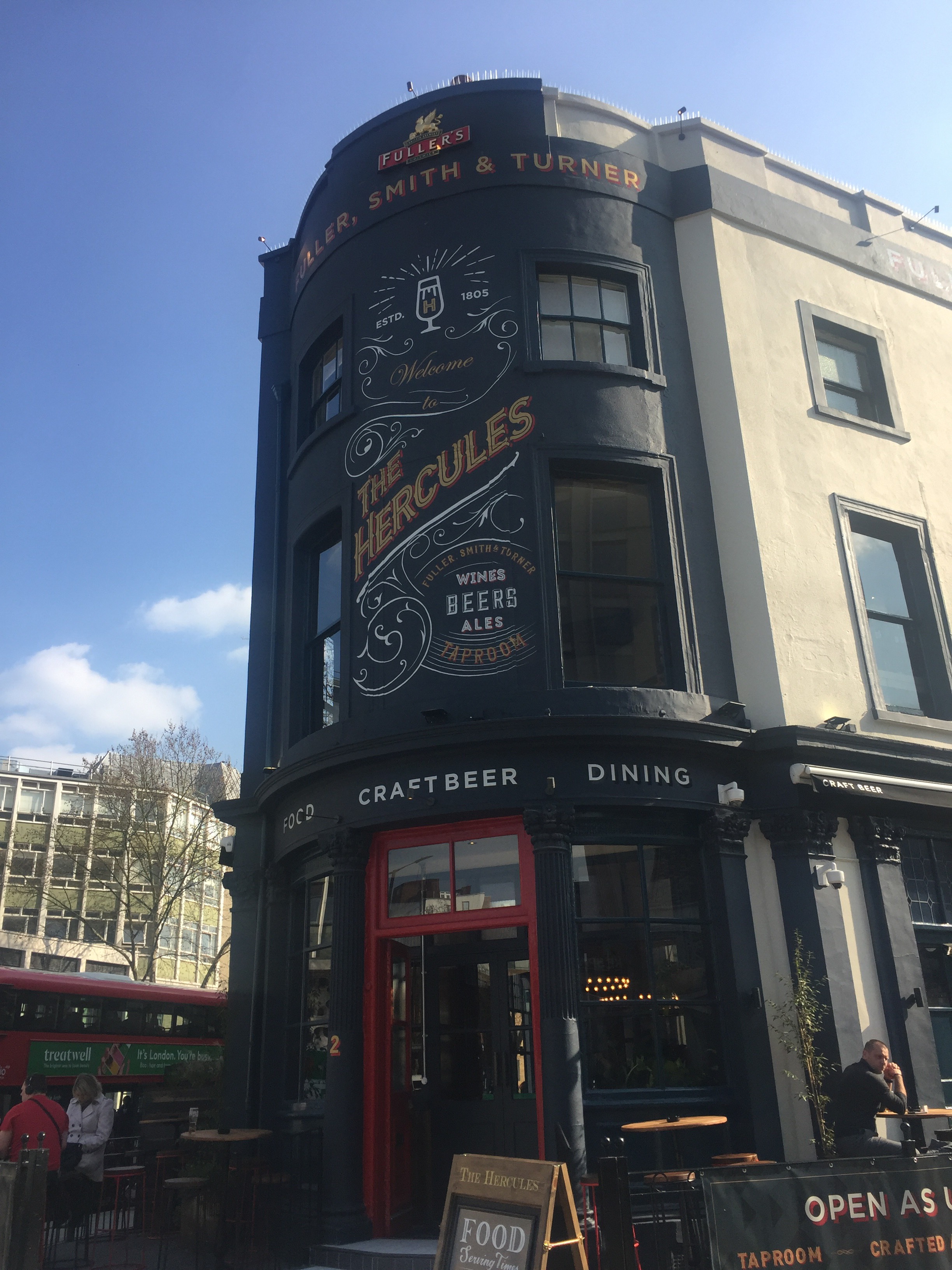
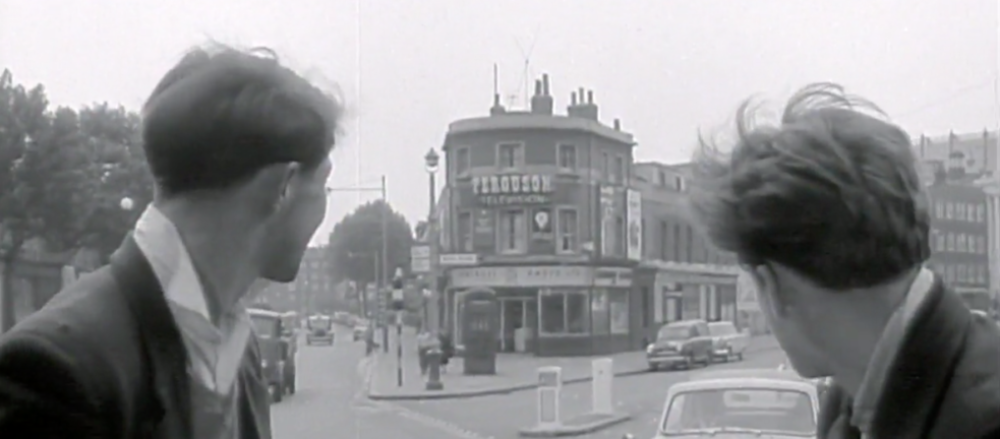
The number nine slot goes to new kid on the block ‘The Hercules’ located across from Lambeth North tube. The first of three gastropubs on our list, it’s made the list mostly due to it having the best selection of beers for a gastropub in Greater Kennington, with no fewer than 24  to choose from , and an impressive selection of spirits and wines. And a curious LED sign telling you about the rotating selection of beers on offer.

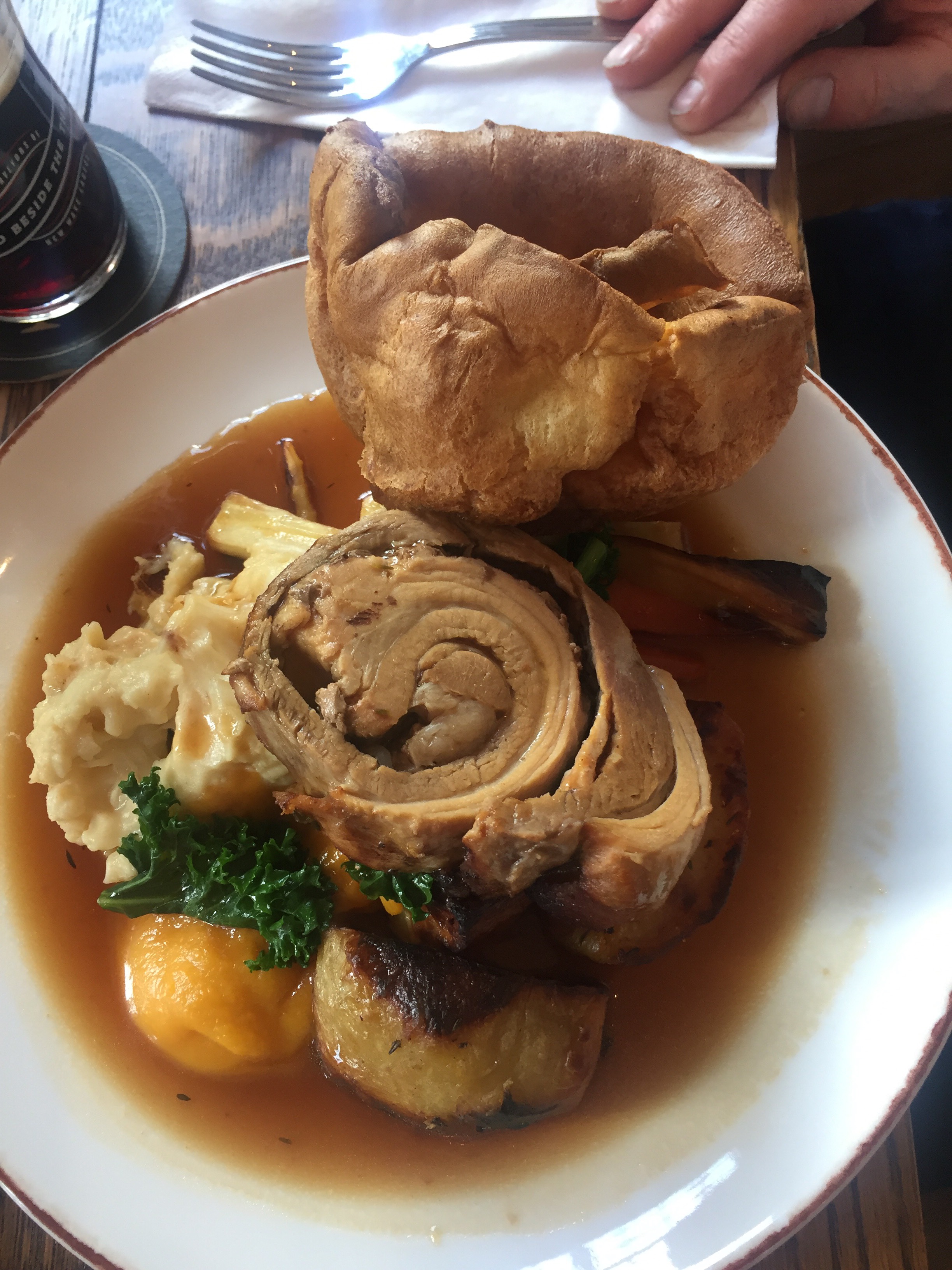
We thought it appropriate to go The Hercules with some tourist friends, as the crowd is a mix of thirty somethings with a melange of visitors wondering how the hell they ended up in Lambeth North when their hotel across the street is called ‘Waterloo’.  We went for Sunday roast, and one of us had beef and the other two pork belly. The portions were generous and the meat well cooked. The roast potatoes were also browned and just the right side of charred. The cauliflower cheese was commendable and the Yorkshire pud was huge and crispy.

Image-3.png

Aside from roasts, The Hercules offer other dishes that are more varied than most local gastropubs, and commendable  bar snacks. On another visit we snacked on spicy squid and Vietnamese chicken wings, and had some very juicy burgers and hake with chorizo. The place also opens at 8am if you fancy a fry up or a quick Merlot on the way to work. The atmosphere is the upmarket ‘old school meets new school’ of the White Bear and is relatively good value for money.

Finally, *expects egg throwing*  we are conscious that The Hercules is part of the Fuller’s pub chain, but even soulless chains can sometimes get things right. If it is just beer you fancy without the food, we recommend Mother Kelly’s under the arches in Vauxhall.

Image-5.png